
( 24 minute read )
As both an American (by birth) and a global brand builder (by profession), I need to look beyond my own perspective.
Why?
Because if I’m building a brand for people in another part of the world, I need to understand what matters to them before deciding how the brand can best connect with them. I’ve always loved traveling because it gives me a chance to see and hear those perspectives firsthand… to experience a culture in places people call home.
The flags above show the nationalities of people I’ve spoken with over the past two months. And the three in the center show where my recent travels took me: USA, England and Switzerland. Pulling the graphic together reminded me how much my personal and professional life has been shaped by people who see the world differently than I do. It’s what drives me in life and in my work.
Maybe it was the ten years I spent living in the melting pot of New York City… or maybe it was falling in love with international football when the World Cup arrived on our shores in 1994. Whatever the reason, I’m proud to be American, but I see the world the way I do because of the people, cultures, languages, and customs I’ve been lucky enough to encounter.
I come to the international football sector with over two decades of experience focused on building globally recognized sport, lifestyle and consumer brands. My career did not follow a traditional route into the business side of the world’s most beautiful game… and I wear that as a badge of honor. It’s what makes my own perspective different and shapes how I think about growing a sporting club as both a global brand and a sustainable business.
My work is about helping sporting organizations align their business strategy with their brand strategy, which paves the way for how they operate day-to-day to best serve their audiences.
Growth is a brand and business decision, not just a commercial target.
Winning matters on the pitch, obviously. For many supporters, their club is part of who they are. I fully respect that. For some, it’s their tribe. Following it is almost a religion. I fully get that.
But… (maybe it’s the American brand builder in me) from the business side, I also see international football as entertainment. Very much so.
I don’t mean turning the match into a show. I mean taking seriously what supporters get for the time and money they give the club: the excitement, the feeling that they belong, and the sense that it was worth being there, even when the result didn’t go their way.
A ticket sales target tells a club how many seats it wants to fill. It doesn’t tell the club what would make someone want to come back. Winning can give them one reason. But a club can’t control every result. It can shape the experience supporters have with the club, and that can give them a reason to come back that lasts longer than the result.
That’s where the work on and off the pitch can reinforce each other, and why I believe a club’s brand is an integral part of its growth strategy.
I’ve been talking with club executives, colleagues from leagues and federations, ownership groups, and brand leaders about where they see opportunities to grow.
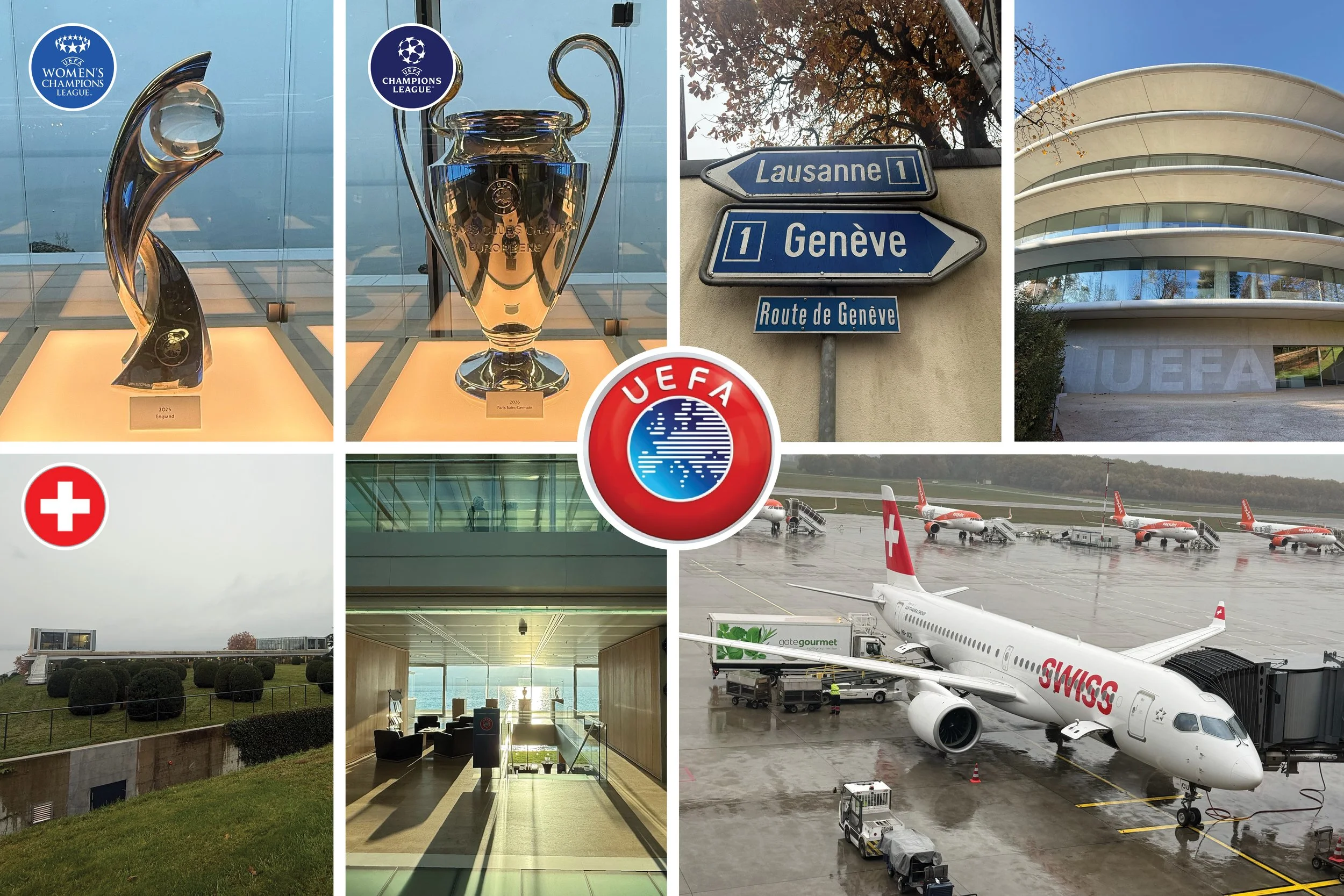
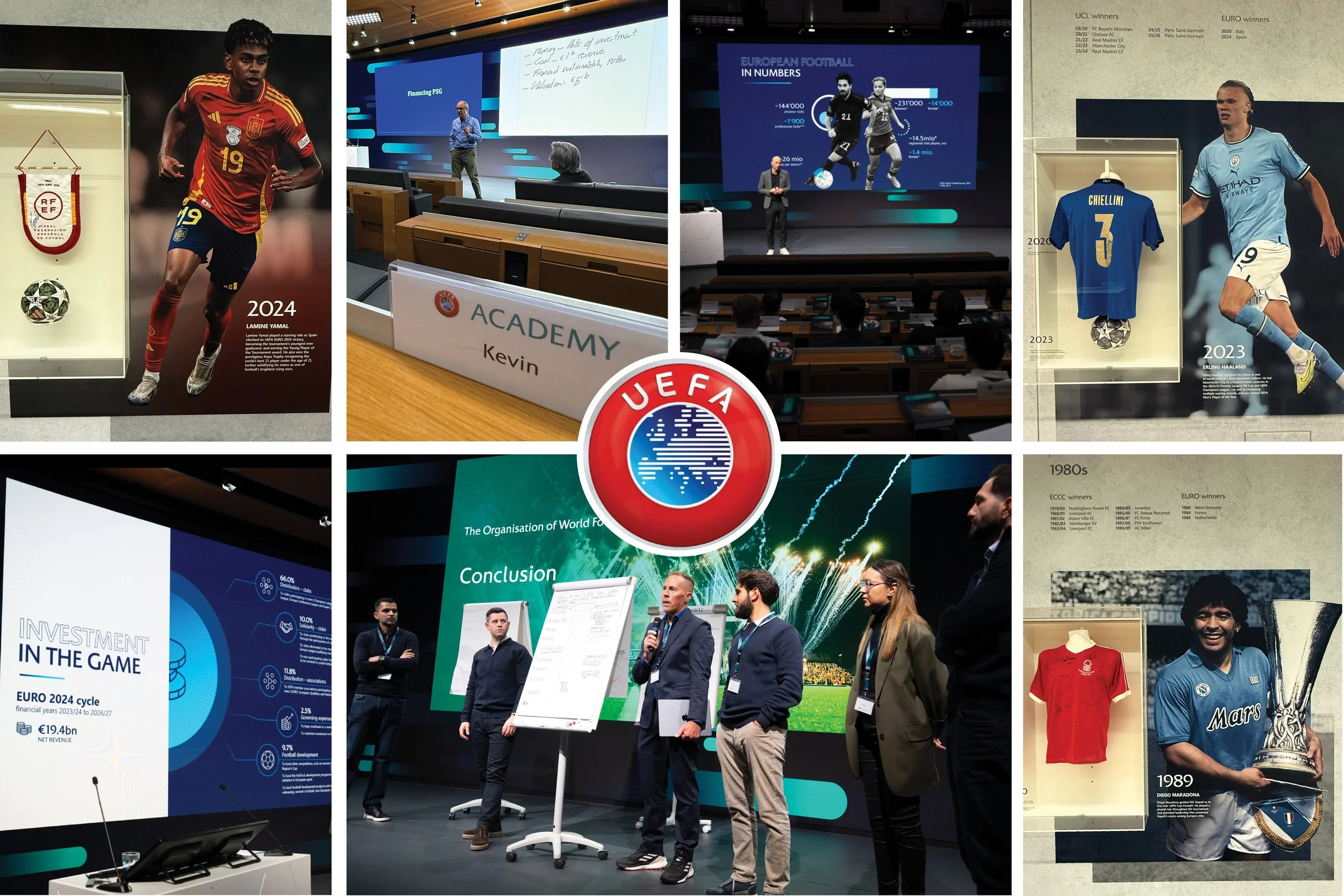
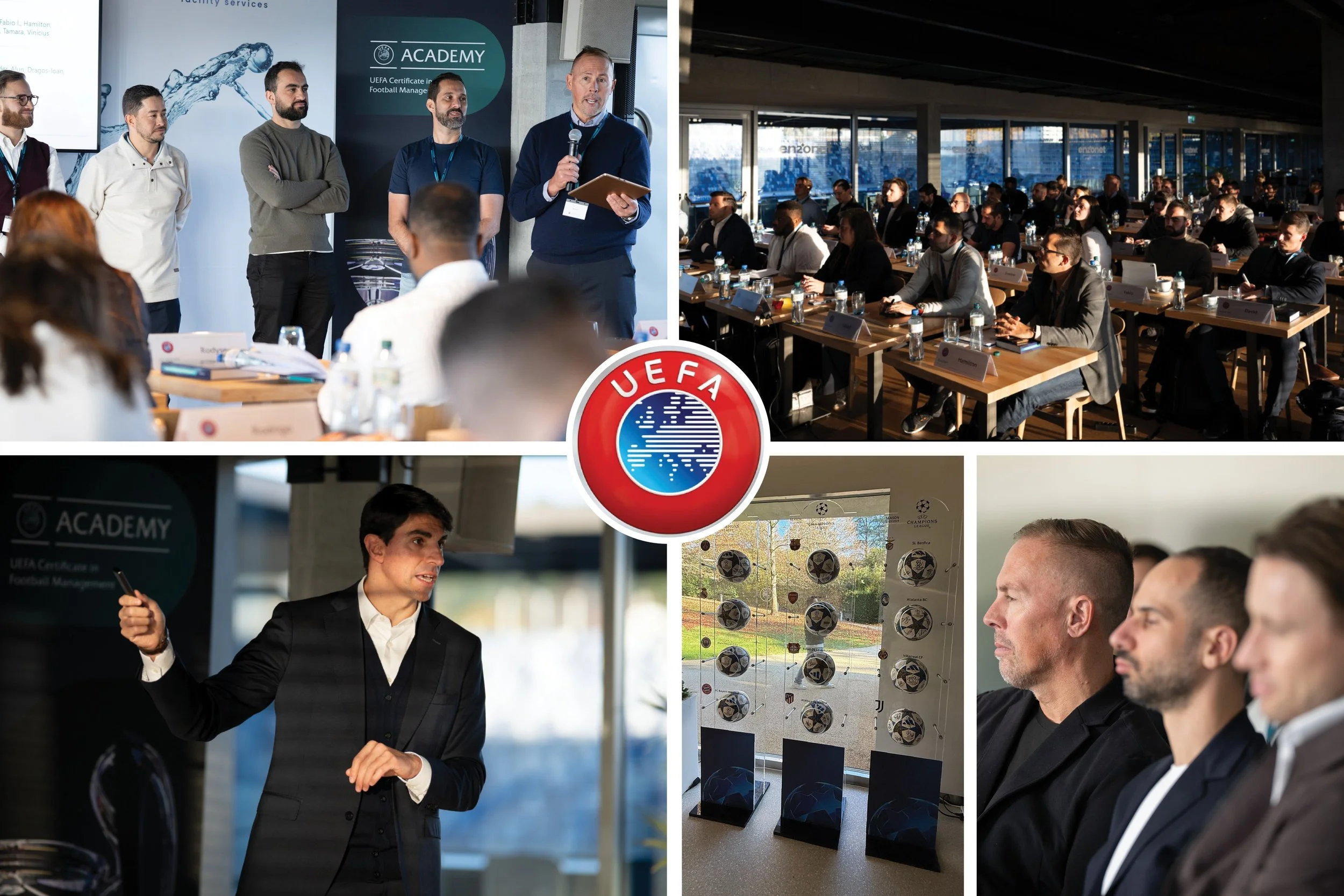
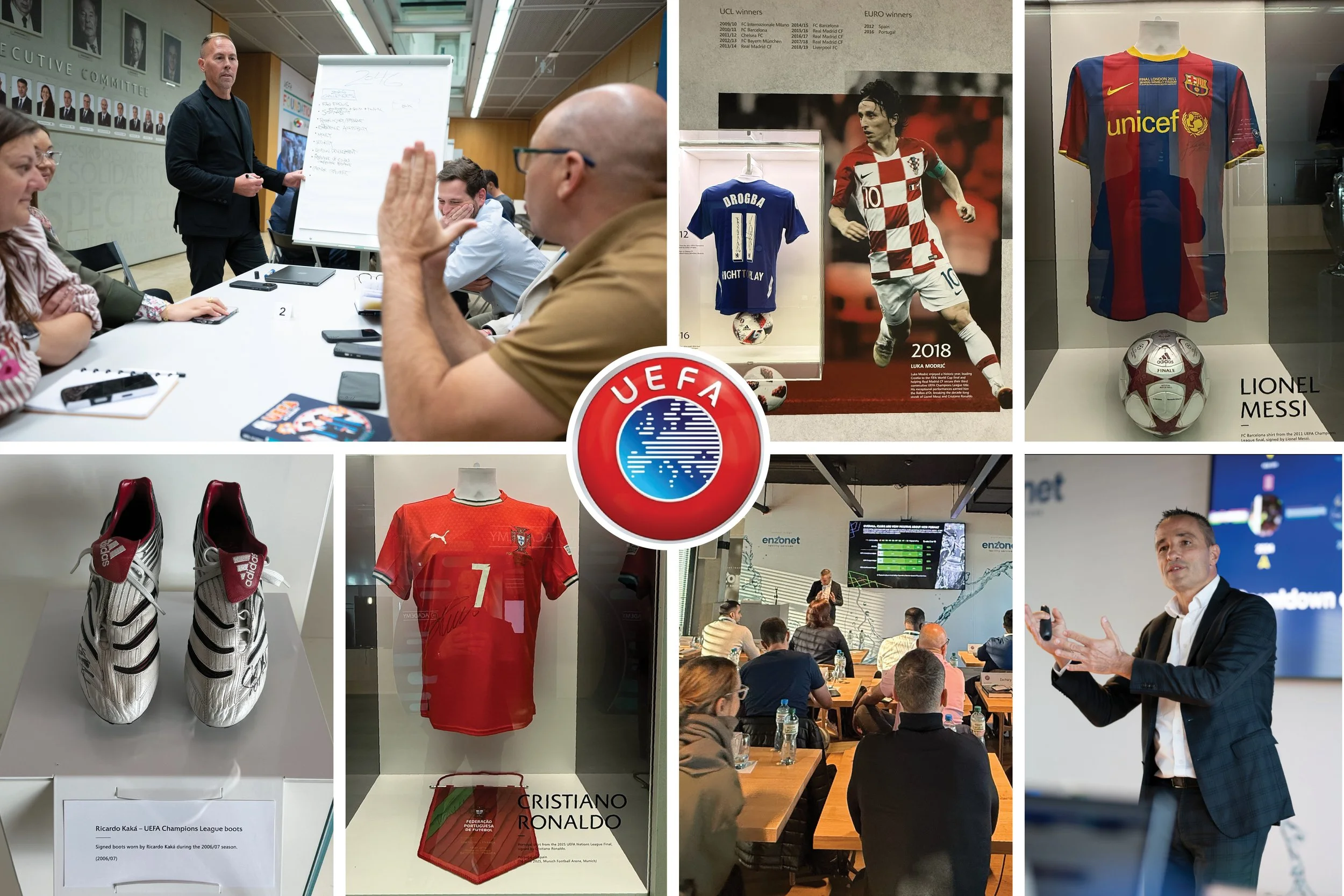
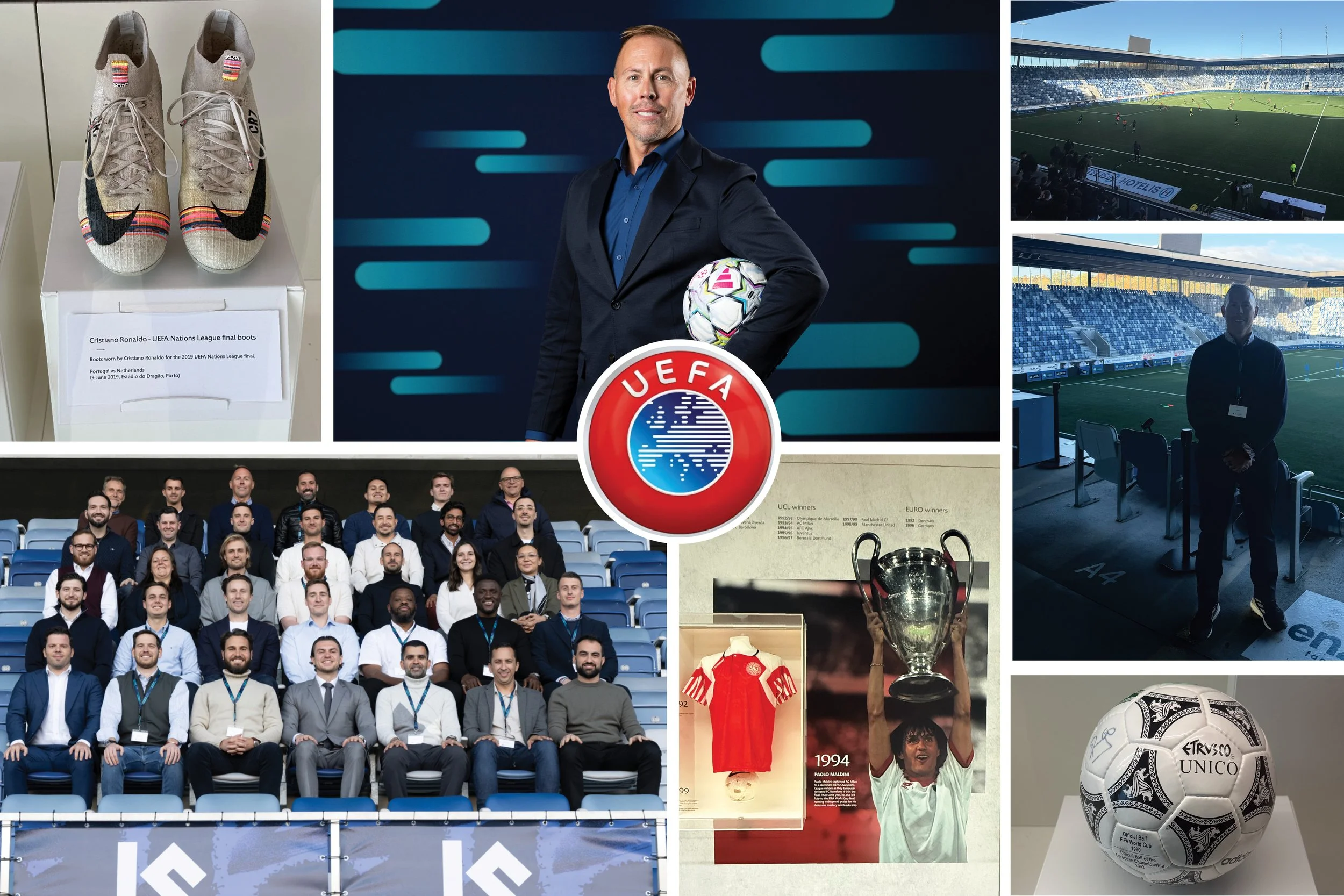
These conversations included meetings in London and at a seminar for the UEFA Certificate in Football Management in Nyon, Switzerland.
At UEFA’s headquarters, hearing both professors (academic) and club executives (practitioners) approach the same challenges from different angles was eye-opening, exciting and motivating. This is one of the reasons I always make time for continuing my professional education. It challenges, evolves, and influences how I approach the decisions I have to make in my work as a brand builder.
One question kept coming up for me during these conversations:
In the crowded and highly competitive global sport sector, what should organizations protect, where should they invest, and what should they do differently to give fans a reason to keep coming back?
I identified twelve themes in these conversations.
Some of the themes include new ideas. Others are familiar and worth revisiting because something around them has changed: what fans expect, what owners want from their clubs, new entrants to the market, or what technology now makes possible…
For each of the four themes I’m sharing here, I’ll cover:
What I’m seeing.
What the research and examples suggest.
What I’d weigh before deciding, and two questions worth asking.
To close this article, I will share something I saw in Nyon that made me think about the work I do alongside my commercial projects, and what young people can take from sport whether or not they go on to play professionally.
The Four Themes:
Authentic Identity: Global Growth Built From Local Roots
What makes a club recognizable at home can give fans in new markets a reason to care. A club’s purpose should guide what it adapts and what it protects as it grows.
Loyalty: Caring for Inherited, Player-First, & Next-Gen Digital Fans
Plenty of fans still grow up with a club and support it for life. Others come for a player, a partnership, or a trend. What gives them a reason to come back when the player leaves or the initial excitement fades?
Dedicated Investment: Growing the Women’s Sport Audience
Who isn’t watching yet, and what would get them to their first match? For those already watching, what makes them choose the next match over everything else they could do with their time? Dedicated investment gives a team room to find out what works for its own audience.
Looking Outside Sport: Testing Ideas From Other Sectors
The next good idea for international football may come from someone who’s never worked in the game. The test is whether it gives fans something they value without getting in the way of what they already love.
#1. Authentic Identity: Global Growth Built From Local Roots
What I’m seeing:
Where a club wants to grow is a business decision.
What it needs to protect as it grows is a brand decision.
And these two strategic decisions need to align.
Take a club simplifying its badge. Removing a symbol that connects the club to its city might make the badge easier to reproduce on merchandise and digitally. But it also tells people less about where the club comes from and could weaken a connection local supporters have felt for years. Both consequences belong in the same decision.
At the UEFA seminar in Nyon, Sean Hamil, a senior lecturer at Birkbeck, University of London, and a longtime UEFA educator, talked about understanding the ‘why’ before proposing a solution or acting on an opportunity.
In my work building global brands, both in and outside sport, I apply that same discipline to brand ‘purpose’. A club’s ‘why’ belongs in the strategic plan that senior leadership signs off on. And it must carry through to the decisions people make across the club, big and small, every day.
What the research and examples suggest:
In Nyon, Michele Montesi, FC Porto’s Chief Strategy Officer, shared how he approaches strategy across the club’s multi-sport portfolio. He stressed the importance of understanding what FC Porto means to local supporters before deciding how to bring that experience to fans outside Portugal.
In a separate public discussion with club president André Villas-Boas, Porto’s leaders described exploring new membership options for international fans without changing who votes in club elections. That’s a concrete example of what can change and what should stay consistent as a club grows outside its local market.
In London, I met with Steve Kavanagh, the longtime chief executive of Millwall Football Club and now head of gunnercooke Sport. Steve has spent years leading clubs, and I appreciated how generous he was with his time and experience. One thing I took from our conversation was how a club’s local relationships can shape the commercial deals it pursues.
Take a sponsorship. A club could sell space for a logo and stop there. Or it could work with a partner to fund more places in a youth football program that local families already trust. The business decision is how to bring in revenue. The brand decision is what the club wants that partnership to stand for. What interests me is when the same deal does both: it brings in revenue and helps the club do more of something its community already values.
As another example, in 1968, incoming FC Barcelona president Narcís de Carreras described Barça as “more than a football club”. Fast forward fifty years. The club built an international campaign in 2018 around that same idea, sharing its Catalan roots and showing audiences what it did beyond men’s football.
What matters here is the order.
Barça spent decades giving “more than a club” its meaning before taking the line around the world. The men’s team gave many people their first reason to watch. The 2018 campaign gave them more reasons to care by showing them what was already there: a club rooted in Catalonia, with a women’s team and a history in other sports. Barça didn’t have to become less local to reach more people. Its local identity was part of what made the story worth sharing.
I see a parallel at Ralph Lauren, where I worked on new brand concepts. The company grew from $6.22 billion in revenue in fiscal 2022 to $8.1 billion in fiscal 2026, about 30% in four years. In fiscal 2026 alone, reported revenue in Asia rose 23% to $2.1 billion. In his November 2026 earnings remarks, CEO Patrice Louvet made the connection explicit: making the brand more desirable and connecting with customers across generations and markets are part of how the company plans to grow over time.
Those fiscal 2026 results came before PoloFest in Tokyo.
What interests me is what Ralph Lauren chose to do in a region where the business was already growing. It kept its Americana roots at the center and gave Japanese vintage dealers and collectors a place to show what the brand meant to them.
That’s where I see the parallel with Barça. You don’t have to change what makes the brand recognizable. You can change who gets to tell the story and how people get to experience it.
What I’d weigh before deciding:
I’d separate what needs to change for the new market from what makes the club worth following in the first place. Porto’s membership idea makes that distinction concrete: give supporters abroad a new way to take part without changing who votes in club elections.
From a business perspective, I’d look at whether fans abroad would see enough value to join.
From a brand perspective, I’d look at whether the offer connects them to the club’s history and community rather than giving them a membership they could get from any club.
And two questions to consider:
If we took the badge off one of our campaigns, what would still make it unmistakably ours?
As we enter a new market, what are we willing to change for that audience, and what would we protect even if it meant growing more slowly?
#2. Loyalty: Caring for Inherited, Player-First, & Next-Gen Digital Fans
What I’m seeing:
Plenty of supporters are born into a club. They grow up with its colors, its stories, and the people they watch it with, often family and close friends. Those experiences don’t fade away. They become memories, and some of them feel sacred.
I grew up in New Jersey and was fiercely loyal to the New York Giants, even on freezing days at the stadium watching Big Blue lose a game they probably should have won.
My two young sons see it differently. They often first see an athlete in a highlight reel, a video game or an interview that makes them want to follow. And when the athlete changes teams, my sons follow them just as easily.
They don’t “bleed blue” the way I did for the Giants in the 1990s because everyone in my family did. But that’s OK. It’s just a different way to become a fan.
Player-first fans aren’t new. What is new is how easy it is to follow an athlete online from one team to the next. While that athlete remains on the roster, the club has a chance to build a connection of its own with their fans.
An athlete can get a fan’s attention. The club has to give them a reason to come back, even when that athlete is no longer on the pitch.
What the research and examples suggest:
A study of football fan loyalty published in Sport, Business and Management analyzed survey responses from 4,706 fans across 121 countries. The survey was shared through football forums on Reddit in 2020, and about 97% of respondents were men.
In that sample, fans identified more strongly with their favorite club than with their favorite player. But, the researchers didn’t track what happened after a player moved.
That’s where my question begins. A spike after a signing tells you people are paying attention. It doesn’t tell you who’ll come back for the club.
Take Paris Saint-Germain for example. PSG signed South Korean international Lee Kang-in in July 2023. In March 2024, the club opened a three-floor flagship store in Seoul, with a shop and café, and invited fans to watch a match against Reims together. At the time, PSG reported that since the start of the 2023/24 season, the number of Korean fans attending first-team matches had risen 20% and stadium tour visits had risen 300%.
Those numbers show the interest in PSG while Lee was there. However, he moved to Atlético Madrid in July 2026 and (about two weeks later) 50,078 people were at Seoul World Cup Stadium as he made his Atlético debut in a friendly against Manchester City. That’s a crowd you can count but the number I’d be most interested in at PSG is how many of the fans who came for Lee kept watching PSG after he left.
In London, I met with Richard Ayers, founder of Seven League and Rematch. His team turned the 1974 boxing match between Muhammad Ali and George Foreman into a live theater experience. The fight took place in Kinshasa, the capital of what was then called Zaire. The fight was the draw. The actors, music and food gave people a way to experience the city and the story around it in real life. Not virtual reality, not digital. An in-person experience that let people feel part of something they might only have seen in old footage.
That’s what I’d take from it for football: a player can be the reason a fan shows up, but what they experience when they get there (and the emotions they feel) can give them something else to connect with. And that something else can be the key to securing a new fan for a club.
At our UEFA seminar in Lausanne, Stéphane Anselmo took us through how UEFA redesigned the Champions League.
One point I wrote down: before you change a competition, know where it came from. UEFA had to weigh what fans wanted against competitive balance, representation across Europe and the impact on domestic competitions. I came away asking how you give fans more matches with something at stake while leaving room for the underdog stories they love.
In the 24/25 season, UEFA replaced the Champions League’s eight groups of four with a single table of 36 clubs. And on January 29, 2025, all 18 matches on the final night of the league phase kicked off at the same time.
35 of the 36 clubs changed position at least once that night. The live table let fans see what a goal elsewhere meant for their own club. Suddenly, a match they might otherwise have ignored mattered too.
I asked Stéphane whether UEFA had looked at NFL RedZone for inspiration or as a point of comparison. RedZone jumps between live NFL games as teams get close to scoring. The Champions League’s new format gave fans a reason to care about what was happening in another match, and the live table showed the digital audience why it mattered as goals went in.
The format changed the competition. The live table changed how fans could follow it, without changing how any individual match was played or decided.
UEFA has 55 member associations and stages more than 2,500 matches a season across its club and national-team competitions. It reported a global audience of 1.18 billion for the 2024/25 Champions League. That’s the scale of the competition, not a measure of what the live table contributed. The question I’d ask is more specific: Did fans who enjoyed the live table watch longer that night or come back for the next round?
What I’d weigh before deciding:
I’d want to know what longtime supporters already come back for, and whether they could give new fans a way in.
Brand = emotion. I’ve always said that, and Scotland’s football supporters at the 2026 World Cup showed exactly what I mean. In Massachusetts, the Tartan Army sang, played bagpipes and welcomed people into the party across Boston. Scotland was a long shot to win the tournament. But that wasn’t going to stop its fans from having the time of their lives and getting behind the players who represented them.
A kid in Boston didn’t need Scottish roots or a favorite Scottish player to feel part of it. The emotion came first. That’s what made those fans such powerful ambassadors for Scottish football and for the country of Scotland itself. They didn’t explain what it meant to support the Scottish Men’s National Team. They let people feel it for themselves and become adopted Scots for a short time.
That’s what I’d take from Scotland. The people who already love a team can give someone new a reason to care. When a club is looking to grow in a new market, I’d ask: how can we give our supporters more room to share what made them fall in love with the club in the first place?
I’d like to see the learning go both ways. Clubs compete on the pitch and for fans’ attention. UEFA’s relationship with them is different. It can compare how fans respond across European competitions and markets. Clubs can see what brings their own supporters back week to week.
PSG could test an idea with fans thousands of miles from home. FC Lausanne-Sport, whose stadium we visited during the seminar, could test one with supporters it sees every week. UEFA and its member associations could help clubs share what they learn and use it to decide what’s worth trying on a bigger stage.
To me, that’s what a partnership between a governing body and football clubs can look like in practice.
And two questions to consider:
If the player who brought these fans in left tomorrow, what would they come back to the club for?
What could clubs test with their own supporters that would help UEFA decide what to try at a larger scale?
#3. Dedicated Investment: Growing the Women’s Sport Audience
What I’m seeing:
Women’s sport deserves investment on its own terms, full stop.
There’s an equity case for it, but treating it only as a social responsibility leaves a business opportunity on the table.
The big question for me is how to use that investment to grow the audience. Who isn’t watching yet… and what would give them a reason to tune in or come to their first match?
Some of those people already follow the men’s team. Others play the game, follow an athlete, or have no connection to the club at all. I’d start by understanding what might draw each of them in.
That’s where a dedicated budget and leaders with the authority to try something different matter. The women’s team can draw on what the wider club does well without assuming the same approach will work for its audience.
What the research and examples suggest:
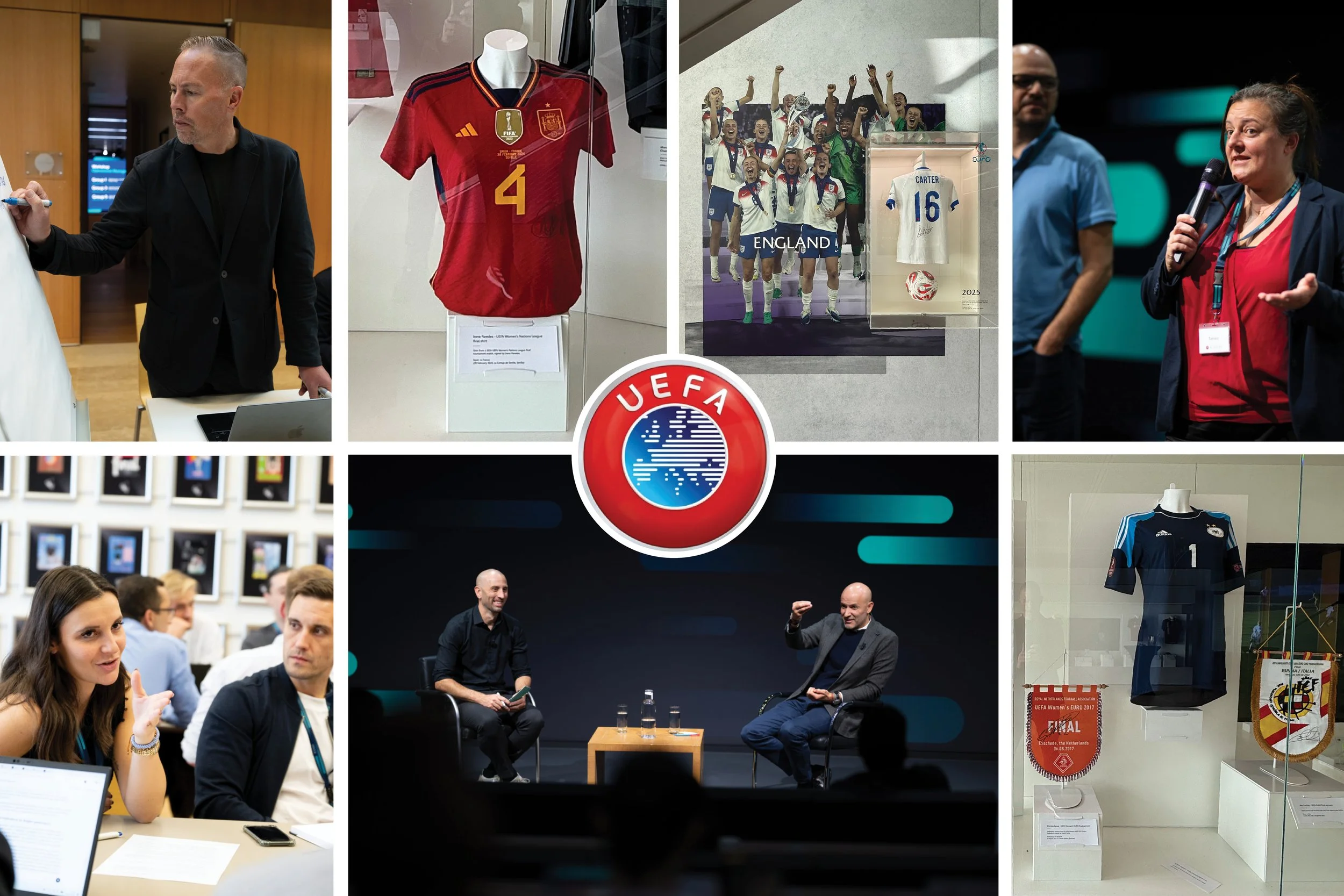
In Nyon, I heard from Solène Froidevaux, a University of Lausanne researcher in sport and gender, and Guillaume Poisson, who led operations for UEFA Women’s EURO 2025. UEFA reported 657,291 in total attendance, with 29 of 31 matches sold out. At a separate public discussion about the tournament’s legacy, Guillaume spoke about changing perceptions of the women’s game, and Solène raised the question of how that visibility could lead to lasting change.
A tournament can bring people in, but someone has to build and nurture what comes next.
On November 19, 2026, Tottenham Hotspur announced three senior leadership roles for the women’s team. Spurs appointed a Director of Women’s Football and a Women’s Growth Director, and promoted from within for the role of Women’s Director of Performance and Operations. What stands out to me is that Spurs gave growing the audience and the commercial business its own leader, while keeping the women’s team connected to the wider club’s resources.
Aston Villa took a different approach, restructuring its women’s team as a separate entity under V Sports so resources could go directly to the team. Maggie Murphy, former CEO of Lewes FC and a former board member of the FA Women’s Super League and Women’s Championship, was appointed managing director of Aston Villa Women.
Maggie brought supporters into the discussion about the team’s direction. To me, those decisions belong together: give the team the resources to build its own business, and listen to the people you’re building it for.
In London, I met with Kerstin Lutz, CEO of Mercury13, which announced a majority investment in Spain’s FC Badalona Women. In France, after acquiring Montpellier’s women’s team, Bex Smith’s Crux Football helped give the club its own brand identity. One shows where owners are putting capital. The other shows what that investment can give a club room to build.
Four World Cups. Five Olympic gold medals. That’s what the U.S. women’s national team has achieved. Generations of fans have watched this team win on the world stage. What interests me is how clubs can build on that connection. What would give someone who clears their schedule to watch the U.S. women at a World Cup a reason to do the same for a club match on an ordinary weekend?
I also look at where experienced football leaders are choosing to build. My good friend Dr. Ceri Bowley was Head of Coaching Support at City Football Group, where he led the development and rollout of a shared coaching philosophy across all of the group’s clubs. His doctoral research looked at how coaches can help young footballers build life skills and learn to handle setbacks. In 2025, he moved with his family from Wales to North Carolina to become chief soccer officer and sporting director of the North Carolina Courage, a club in the U.S. National Women’s Soccer League (NWSL).
That move says something to me about where the women’s game is going. Growth isn’t just about the crowds a team can draw today. It’s also about the caliber of people a club can bring in to develop players and coaches and build a team supporters will want to keep watching.
I see another kind of investment in girls’ and women’s flag football. Under Armour and the DICK’S Sporting Goods Foundation committed $1 million to expand access for girls. Separately, in 2026 the NCAA added flag football to its Emerging Sports for Women program. One helps more girls get on the field. The other gives them a clearer path to keep playing in college.
And a quick personal congratulations to Brian Boring on more than 20 years helping shape the Under Armour brand. Well done, my friend.
What I’d weigh before deciding:
I’d start with one audience the women’s team wants to reach and ask what’s keeping them from coming. Take girls who already play locally and the families who take them to training. They already give football a good part of their weekend. What would make a women’s match worth making time for?
I wouldn’t judge the investment on one season’s financial results alone. A group outing with a youth club might get families to their first match. Seeing them buy tickets on their own for a second or third match would tell me something different. I’d look at that alongside whether sponsors choose to renew. Both help show whether the team is building relationships it can grow from.
And two questions to consider:
Who aren’t we reaching today, and what would give them a reason to watch or attend for the first time?
What would tell us we’d earned enough of their interest to invest in reaching more people like them?
I wouldn’t look only at football for answers. Hospitality and lifestyle brands have spent years working out what makes a first visit feel welcoming and what brings people back. That takes me to the fourth theme: what’s worth borrowing from outside sport?
#4. Looking Outside Sport: Testing Ideas From Other Sectors
What I’m seeing:
Football has plenty to learn from football.
But there are situations,, challenges, and problems other industries may already have spent years working through. The hard part for a football club is making time to look when there’s another match in three days and the financial pressures aren’t going away.
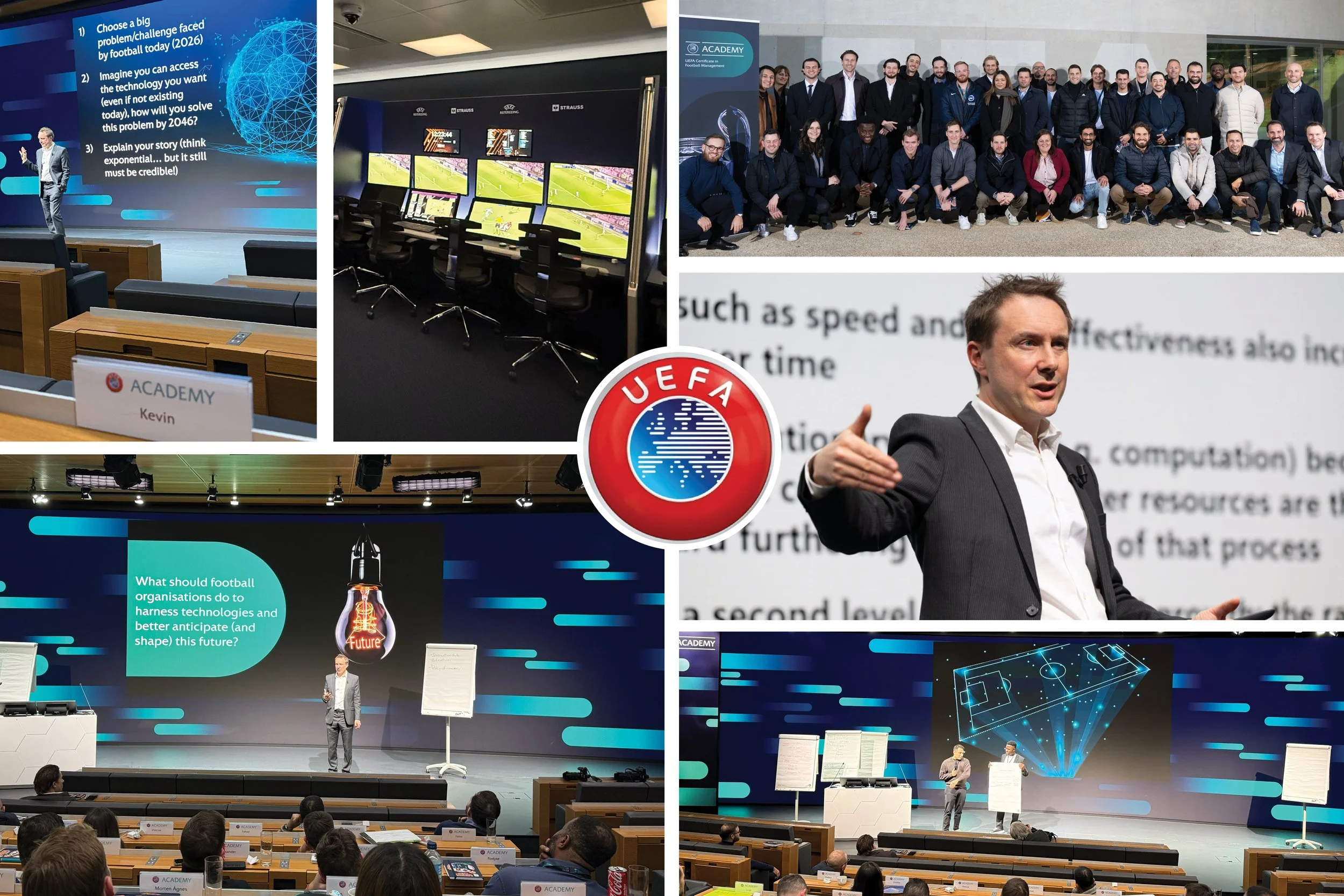
Thomas Junod, head of UEFA Academy, closed our three day seminar in Nyon with a session on exponential thinking. We’d spent time understanding how football works. And then Thomas asked us to look beyond the familiar answers. I came away thinking about where clubs could find ideas they wouldn’t normally consider and how they could make room to test them.
This is exactly how I think about building globally recognized brands that build strong emotional connections with their audiences so I truly enjoyed Thomas’s presentation and collaborative exercises.
What the research and examples suggest:
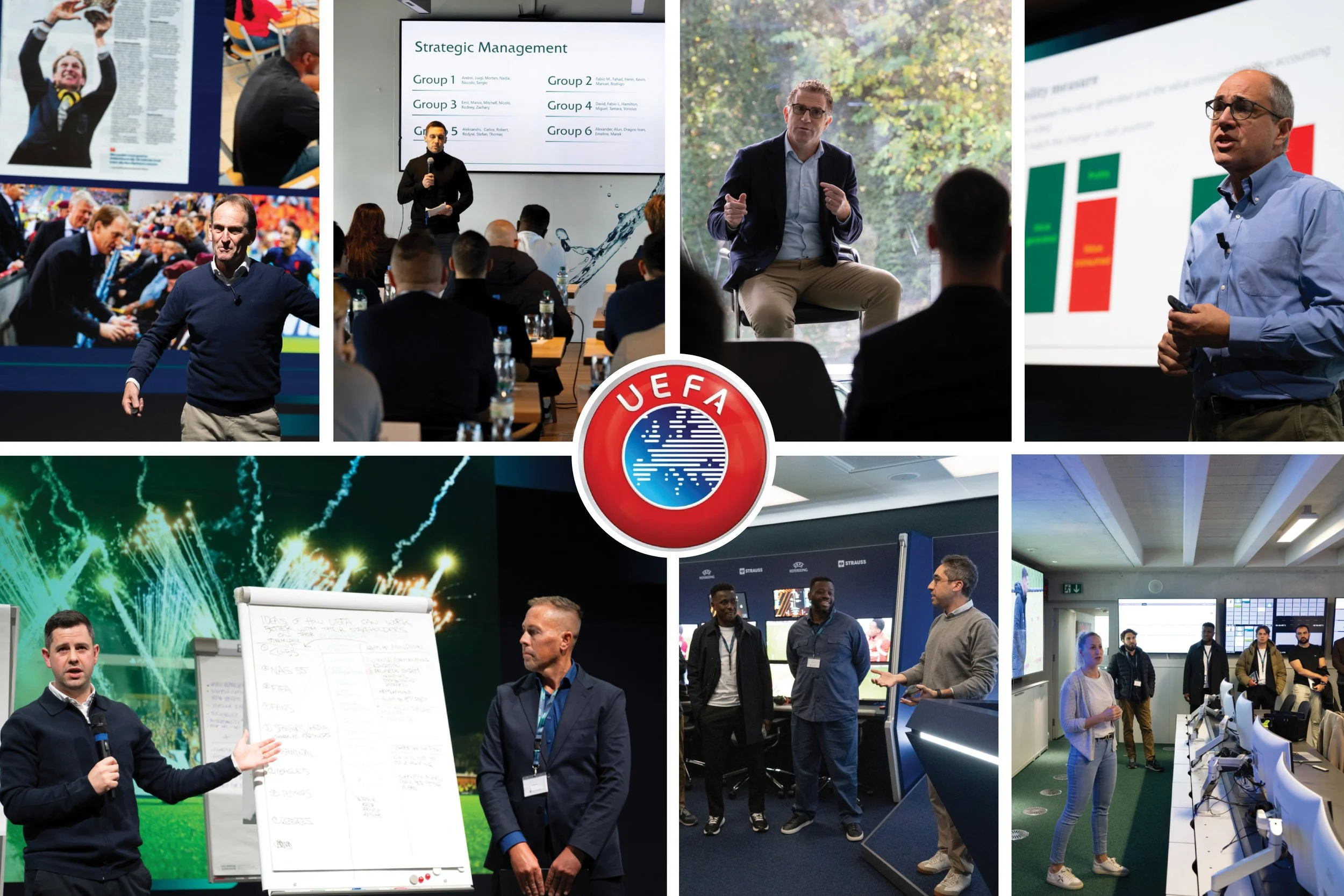
During the seminar, Antonio Dávila, a professor at HEC Lausanne and a former visiting professor at Harvard Business School, led a case study on football operations. Joost de Wit, who served as CEO of RKC Waalwijk and Vitesse Arnhem and worked in international partnerships at PSV Eindhoven, brought the operator’s perspective. I valued hearing both. It’s one thing to see why an idea might work. It’s another to work out who inside a club can deliver it and what they’d need to make it happen.
From a brand angle, I have a lot of admiration for London based apparel brand Vollebak which builds innovation into familiar designs. For its Firefighter Hoodie, it used fibers found in firefighters’ hoods and racing suits to make an everyday garment. The hoodie is familiar. What’s new is the material and what it can do. Even if it’s not fully tested by brand fans, the idea of what it can be emotionally connects with people and draws their attention.
In London, I met with Keith Cooper, who’s spent years at Paul Smith and knows the brand inside out. What I appreciated about our conversation was that knowing a brand that well doesn’t make you less open to collaboration. It helps you recognize which partners can bring something new without changing what people already love about you.
Paul Smith’s collaboration with Beano, the British comic, is a good example. Beano brought its humor and characters to familiar Paul Smith pieces like T-shirts and canvas totes. It still felt like both brands, and it gave each a way to reach people who might already know and love the other. That’s what I’d look for in a football partnership: a reason for both audiences to care, not just a place to put two logos.
There’s a people side to this too. My conversation with Adam Judd of Elevate Talent made me think about where clubs look for talent. If the brief is to give supporters a reason to stay connected between matches, someone from entertainment, hospitality or a lifestyle brand may have spent years solving a similar problem.
Elevate itself is a good example of why I wouldn’t look in only one direction. The San Francisco 49ers helped found Elevate and are part of its ownership group. When Leeds United brought Elevate in to assess the redevelopment of Elland Road, the team looked at venues in both Europe and North America and asked Leeds supporters what they wanted from their ground. That’s what interests me. European clubs can learn from how American teams approach hospitality and matchday revenue. American teams can learn from how European clubs build a matchday around traditions that supporters feel are theirs.
The question isn’t whose playbook is better. It’s what travels well and what has to be built for the people who call that place home.
What I’d weigh before deciding:
I’d start with a problem the club needs to solve, then look outside sport for someone who’s found a good answer. I wouldn’t try to copy the whole approach. I’d ask which part could make things better for supporters here and whether the club could deliver it week after week. That’s what I’d want a small test to tell me.
And two questions to consider:
What problem are we still trying to solve inside football that someone in another industry already handles well?
What would have to improve for supporters, and at what cost, to make the idea worth a bigger investment?
What International Football & Global Sport Make Possible
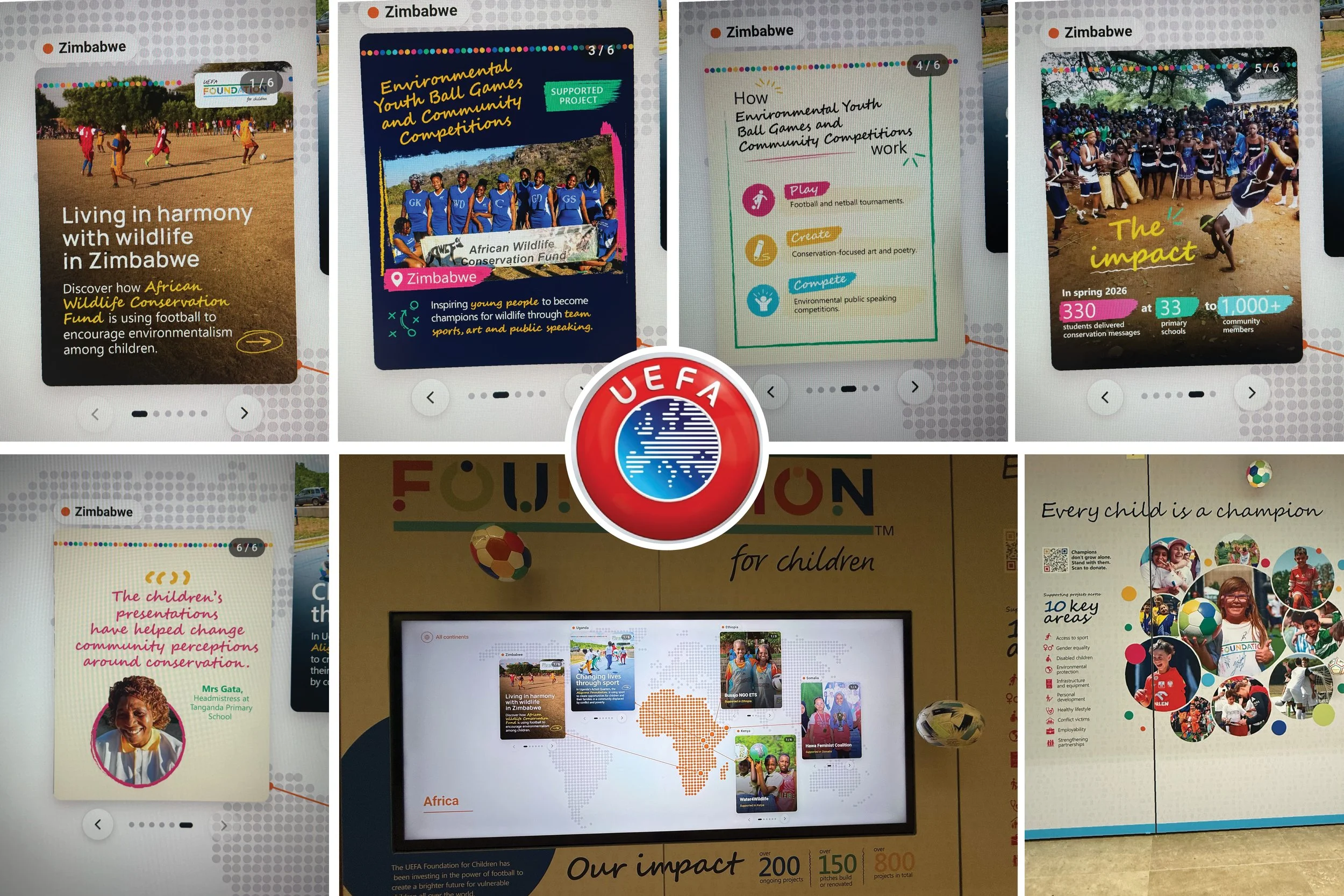
At UEFA headquarters in Nyon, I saw a display about a project in Zimbabwe supported by the UEFA Foundation for Children. The African Wildlife Conservation Fund brings young people together through football and netball and uses those gatherings to teach them about living alongside wildlife.
I’d gone to Nyon to learn more about the business of football. And here was an example of what the game can make possible for a community.
That matters to me.
Alongside my commercial work, I work with the Sustainable Sport Foundation and CSPRO Academy to help young athletes build skills they can use in sport and in life. At CSPRO in Zimbabwe, founder Costa Nhamoinesu draws on his own experience in professional football to give young players and coaches a better-supported path than the one he had. He wants them to go back to their communities and pass on what they’ve learned.
In 2023, Sparta Prague, where Costa played and served as captain, hosted CSPRO coach Musset Zengeni for two weeks at its academy. Two young players traveled with him. One idea Musset wanted to take home was to link football training more closely to school attendance.
Nobody needed to find the next Messi for that trip to be worthwhile. A coach went home with an idea he could put to work with the next group of kids. And as Musset told Sparta, after the club sent training gear, kids at CSPRO started following its results online. They had a reason to care about a club thousands of miles away because of something it had done in their community.
And a personal congratulations to Costa on his induction into the Sparta Prague Hall of Fame. Well deserved, my friend.
I spend much of my time thinking about how clubs earn that kind of connection. I wanted to end here because, for me, there’s an equally important question: Once a club has earned that connection, what can it make possible for the people who feel it?
The Eight Other Themes I’m Exploring
#5. Strategy Under Pressure: Knowing When to Change Course
A bad run on the pitch can expose a flaw in the plan or tempt you to abandon a good strategy. What evidence would tell you it’s time to change the business or brand strategy rather than give it more time?
#6. Technology in Sport: Knowing When to Step In
The best technology in sport may be the kind you barely notice until it’s needed. Seeing UEFA’s VAR hub made me think about where AI and other tools could help, and where they’d just get in the way of the game.
#7. Club Ownership: Sharing Resources, Keeping Decisions Local
An ownership group can give its clubs better sponsorship tools without deciding from the center how each club works with its supporters.
#8. Matchday Value: From the Family Ticket to the Hospitality Suite
Clubs can learn from luxury and hospitality brands about what makes a premium experience worth paying for. A lifelong supporter should still be able to afford to bring their family and feel they got a good day out.
#9. American Sport: What European Football Can Borrow
Some American approaches to media and entertainment are worth testing. The question is which ones fit European football and offer something its supporters actually want.
#10. Local Partnerships: Promoting the Place as Well as the Club
A club’s reach can give local businesses and the region they share a platform none of them could build alone.
#11. Academy Success: Beyond the First-Team Debut
A first-team debut matters. So does what every young person takes from the academy into education, work or life after football.
#12. Sponsorship: Giving Fans Something They Can Experience
Beyond putting its name in front of supporters, what can a partner make possible that the club couldn’t offer on its own?
Thanks for reading.
If one of these decisions is on your desk, send me a note. I’d be interested to hear what you’re weighing.
Kevin Korn